Year
2025
Client
Me. I need projects.
Category
Deep Learning
Product Duration
1 Week
Acute lymphoblastic leukemia (ALL) is the most common type of childhood cancer and accounts for approximately 25% of the pediatric cancers. These cells have been segmented from microscopic images and are representative of images in the real-world because they contain some staining noise and illumination errors, although these errors have largely been fixed in the course of acquisition. The task of identifying immature leukemic blasts from normal cells under the microscope is challenging due to morphological similarity and thus the ground truth labels were annotated by an expert oncologist.
We employ EfficientNetB3, a state-of-the-art convolutional neural network that balances depth, width, and resolution using a compound coefficient.
Model Structure
Stage | Component | Description |
|---|---|---|
1. Base | EfficientNetB3 | Pre-trained on ImageNet. Used for feature extraction (Top layers removed). |
2. Pooling | Global Max Pooling | Reduces spatial dimensions while retaining the most prominent features. |
3. Norm | Batch Normalization | Stabilizes learning by normalizing inputs (axis=−1). |
4. Dense | Fully Connected (256) | Custom layer with L1/L2 regularization and ReLU activation. |
5. Dropout | Dropout (0.45) | Randomly sets 45% of neurons to 0 to prevent overfitting. |
6. Output | Dense (2) | Softmax layer for binary classification probabilities. |
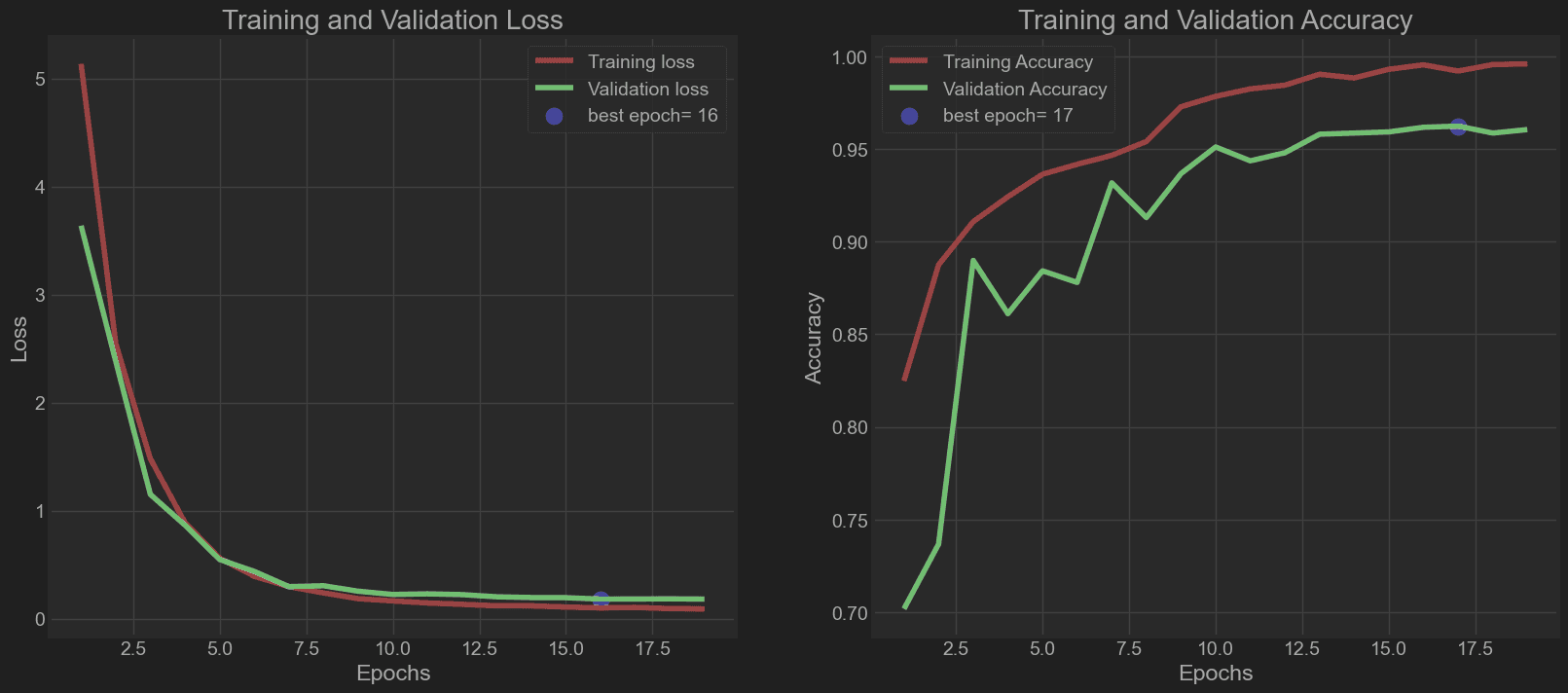
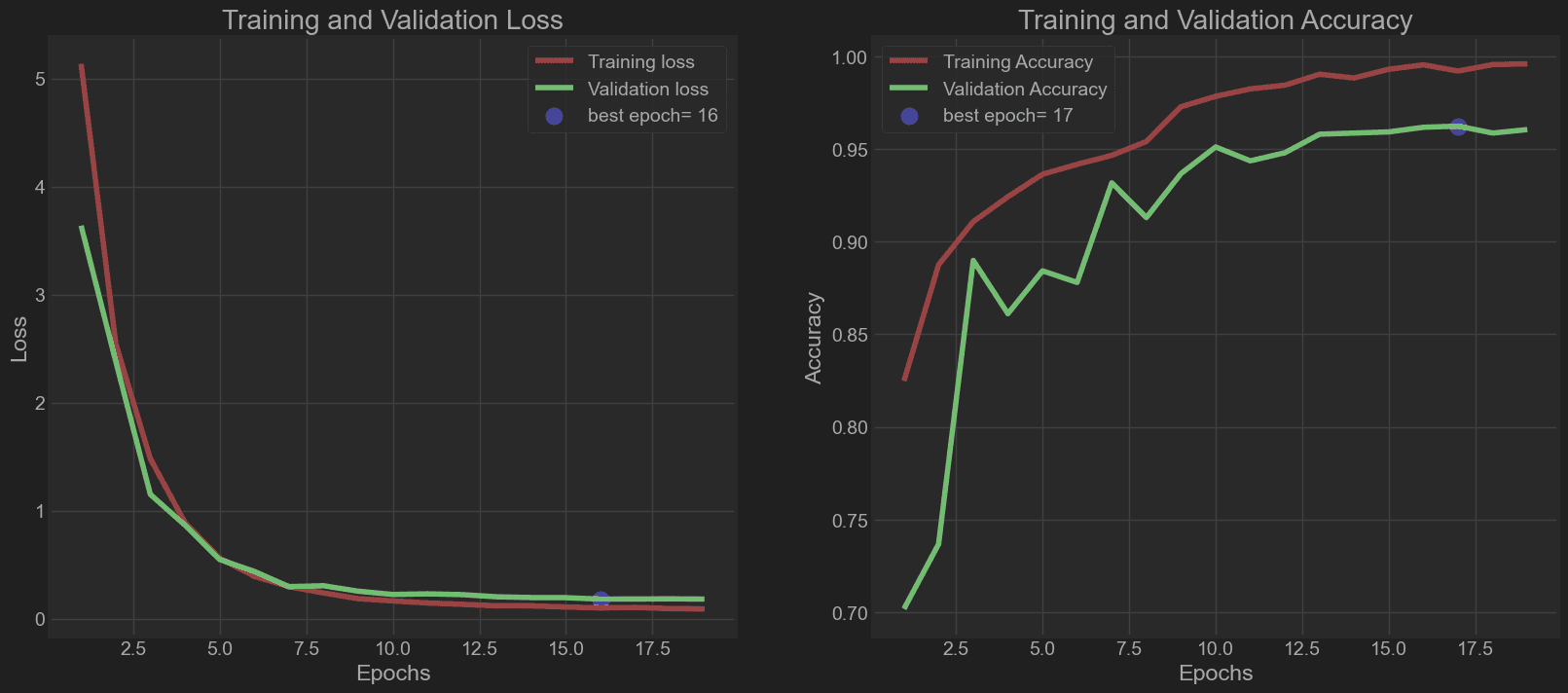
Based on the classification report, the model distinguishes between ALL (Leukemia) and HEM (Normal) cells with high precision.
Predicted: ALL | Predicted: HEM | |
|---|---|---|
Actual: ALL | 1068 (True Positives) | 23 (False Negatives) |
Actual: HEM | 49 (False Positives) | 460 (True Negatives) |
Classification Report Summary
Class | Precision | Recall | F1-Score |
|---|---|---|---|
ALL | 0.96 | 0.98 | 0.97 |
HEM | 0.95 | 0.90 | 0.93 |
Overall Accuracy | 95% |